
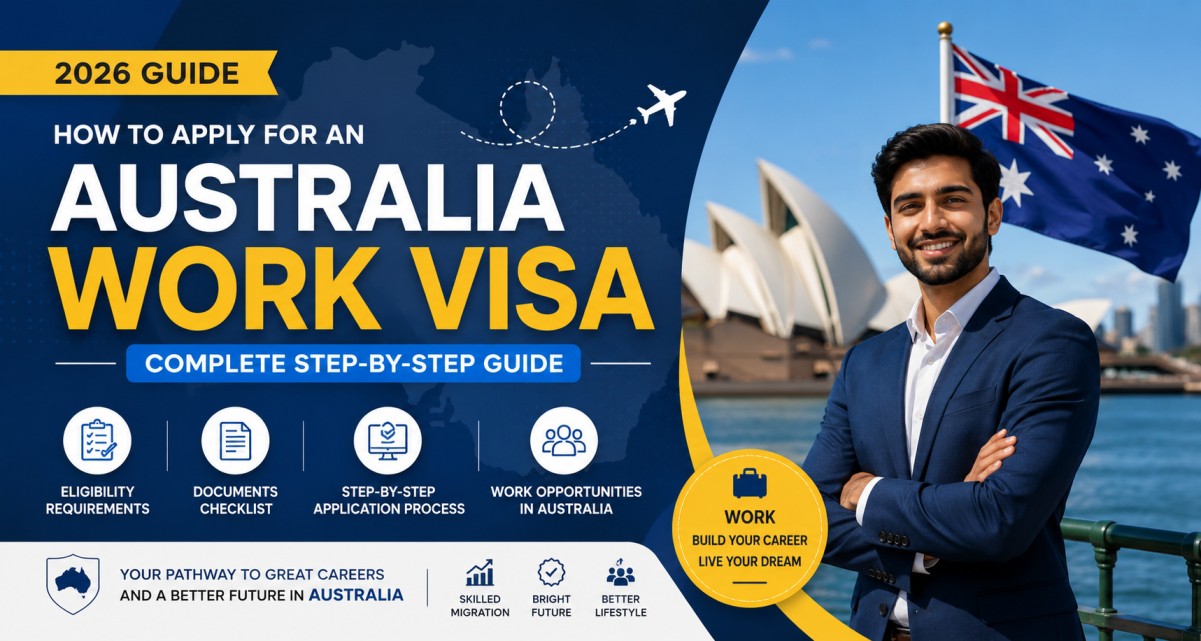
Australia remains one of the most attractive destinations for skilled professionals seeking better career opportunities, higher salaries, and an excellent quality of life. With a strong economy and ongoing demand for skilled workers across various industries, thousands of migrants apply for Australian work visas every year.
If you are planning to work in Australia in 2026, understanding the visa process is essential. This guide explains everything you need to know about applying for an Australia work visa, including eligibility requirements, visa options, required documents, and the application process.
Why Work in Australia?
Australia offers numerous benefits to international workers, including:
Competitive salaries and employee benefits
High standard of living
Strong healthcare and education systems
Multicultural society
Opportunities for permanent residency
Safe and stable economy
Excellent work-life balance
Due to skill shortages in several sectors, Australia continues to welcome qualified workers from around the world.
Types of Australia Work Visas
Before applying, you must identify the visa category that best suits your qualifications and employment situation.
1. Skilled Independent Visa (Subclass 189)
This visa is designed for skilled workers who are not sponsored by an employer, state, or family member.
Key Features:
Permanent residency visa
No employer sponsorship required
Based on points-tested system
Allows living and working anywhere in Australia
2. Skilled Nominated Visa (Subclass 190)
This visa requires nomination by an Australian state or territory government.
Benefits:
Permanent residency pathway
Additional points for state nomination
Access to employment opportunities within the nominating state
3. Skilled Work Regional Visa (Subclass 491)
Designed for workers willing to live and work in regional Australia.
Advantages:
Valid for 5 years
Pathway to permanent residency
Additional points for regional nomination
4. Temporary Skill Shortage Visa (Subclass 482)
This employer-sponsored visa allows Australian businesses to hire overseas workers when local talent is unavailable.
Benefits:
Employer sponsorship
Opportunity to gain Australian work experience
Potential pathway to permanent residency
5. Employer Nomination Scheme (Subclass 186)
A permanent residency visa for skilled workers nominated by an Australian employer.
Ideal For:
Experienced professionals
Long-term employment opportunities
Permanent settlement in Australia
Eligibility Requirements for an Australia Work Visa
Eligibility varies depending on the visa category. However, common requirements include:
Age Requirement
Most skilled migration visas require applicants to be under 45 years of age at the time of invitation.
Occupation Requirement
Your occupation must appear on Australia's Skilled Occupation List.
Popular occupations include:
Software Engineers
Registered Nurses
Electricians
Accountants
Construction Managers
Teachers
ICT Professionals
Engineers
Skills Assessment
Applicants must obtain a positive skills assessment from the relevant assessing authority.
Examples:
Engineers Australia
Australian Computer Society (ACS)
VETASSESS
CPA Australia
English Language Requirement
Most applicants must demonstrate English proficiency through approved tests such as:
IELTS
PTE Academic
TOEFL iBT
Cambridge English
Higher English scores can increase your migration points.
Health and Character Requirements
Applicants must:
Complete medical examinations
Obtain police clearance certificates
Meet Australia's character requirements
Australia Work Visa Points System
For skilled migration visas such as Subclass 189, 190, and 491, applicants are assessed through a points-based system.
Points are awarded for:
Age
English proficiency
Skilled work experience
Educational qualifications
Australian study experience
Partner skills
State nomination
Generally, a minimum of 65 points is required, although higher scores improve your chances of receiving an invitation.
Documents Required for Australia Work Visa
Prepare the following documents before applying:
Valid passport
Educational certificates
Employment reference letters
Skills assessment report
English language test results
Resume or CV
Police clearance certificates
Medical examination reports
Birth certificate
Marriage certificate (if applicable)
Ensuring all documents are accurate and complete can prevent processing delays.
Step-by-Step Process to Apply for an Australia Work Visa
Step 1: Check Eligibility
Review visa requirements and verify whether your occupation appears on the Skilled Occupation List.
Step 2: Complete Skills Assessment
Apply through the relevant skills assessment authority and obtain a positive assessment.
Step 3: Take an English Language Test
Book and complete an approved English proficiency test.
Step 4: Calculate Your Points
Determine your eligibility under Australia's points system.
Step 5: Submit an Expression of Interest (EOI)
Create an EOI through SkillSelect and provide your details.
Step 6: Receive Invitation to Apply
If your profile meets the required criteria, you may receive an invitation from the Australian Government or a state authority.
Step 7: Lodge Visa Application
Submit your visa application online and upload supporting documents.
Step 8: Complete Health and Character Checks
Attend medical examinations and submit police clearance certificates.
Step 9: Wait for Visa Decision
The Department of Home Affairs will assess your application and issue a decision.
Australia Work Visa Processing Time
Processing times vary based on visa type, application volume, and document completeness.
Factors affecting processing include:
Occupation demand
Skills assessment delays
Health checks
Verification requirements
Submitting accurate documentation helps speed up the process.
Common Mistakes to Avoid
Many applicants face delays or refusals due to avoidable errors.
Common mistakes include:
Incorrect information in the application
Incomplete documents
Low English test scores
Insufficient points
Expired documents
Poor employment evidence
Seeking professional guidance can help avoid these issues.
Final Thoughts
Australia continues to offer excellent opportunities for skilled professionals seeking international career growth. Whether you are applying through skilled migration, employer sponsorship, or regional programs, understanding the visa process is crucial for success.
By preparing the right documents, meeting eligibility requirements, and following the correct application process, you can significantly improve your chances of obtaining an Australia work visa in 2026.
If you are unsure which visa pathway is best for your profile, consulting a registered migration professional can help you make informed decisions and avoid costly mistakes.
10 Frequently Asked Questions (FAQs)
1. What is the easiest Australia work visa to obtain?
The easiest option depends on your occupation, qualifications, and whether you have employer sponsorship. The Subclass 482 visa is often a common pathway for sponsored workers.
2. What is the minimum IELTS score required for an Australia work visa?
Most skilled visas require at least Competent English, generally equivalent to IELTS 6.0 in each band.
3. Can I apply for an Australia work visa without a job offer?
Yes. Visas such as Subclass 189 do not require employer sponsorship or a job offer.
4. How many points are required for an Australia work visa?
The minimum requirement is usually 65 points, although higher scores improve your chances of receiving an invitation.
5. Is work experience mandatory for Australian skilled migration?
Yes, relevant work experience often contributes significantly to your eligibility and points score.
6. Can my family accompany me on a work visa?
Yes. Most Australian work visas allow eligible family members, including spouses and dependent children, to accompany you.
7. How long does it take to process an Australia work visa?
Processing times vary depending on the visa category, application complexity, and government workload.
8. Can a work visa lead to permanent residency in Australia?
Yes. Several work visas, including Subclass 482 and Subclass 491, offer pathways to permanent residency.
9. What occupations are currently in demand in Australia?
Healthcare, engineering, IT, construction, education, and trades occupations are commonly in demand.
10. Can I apply for an Australia work visa from India?
Yes. Indian citizens can apply for Australian work visas if they meet the eligibility requirements and submit the necessary documents.